
Court finds that Coyote president/founder’s blog post and director of operation’s Facebook status update could qualify as “adverse action” against employees for purposes of FLSA retaliation claimsStewart v. CUS Nashville, LLC,  2013 WL 456482 (M.D.Tenn. Feb. 6, 2013)

We’ve seen cases  where employees were disciplined or fired for venting online (see posts here and here).  But what about when the employer does the venting?  That can create legal problems as well.
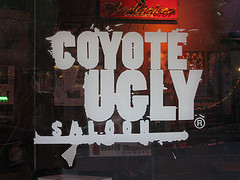
Employees of different bars in the well-known Coyote Ugly Saloon franchise filed a class action against corporate entities related to the franchise and Coyote Ugly’s president and founder, Liliana Lovell.  The lawsuit claimed violations of the Fair Labor Standards Act.  One of the plaintiffs (Stewart), claims that her employer retaliated against her shortly after the lawsuit was filed.  The alleged retaliation came in the form of this entry on Lovell’s “Lil Spills” blog, which appears on Coyote Ugly’s website:

“By the way Lil, you should be getting served with a lawsuit. No worries just sign for it”. This particular case will end up pissing me off cause it is coming from someone we terminated for theft. I have to believe in my heart that somewhere down the road, bad people end up facing bad circumstances!
I have been reading the basics of Buddhism and am going to a class on Monday. The Buddhist way would be to find beauty in the situation and release anger knowing that peace will come. Obviously , I am still a very new Buddhist cause my thoughts are ” fuck that bitch”. Let me do my breathing exercises and see if any of my thoughts change. Lol

Stewart claimed that the entry falsely accused of her theft.

A second employee (Stone), claimed that Coyote Ugly’s Director of Operations (Huckaby) made the following post to his Facebook page: “Dear God, please don’t let me kill the girl that is suing me .… that is all …..”  Huckaby was intoxicated when he made this post.  According to Stone, Huckaby was sitting across the bar from her when he made the post.  Stone, who at the time was Facebook friends with Huckaby, saw the post on her phone almost an hour later, but the post was removed the next day.  Huckaby did not remember making or removing the Facebook post.

Stone further claimed that Huckaby made retaliatory comments the next night after learning that a customer threatened to sue after falling down some stairs.  Huckaby allegedly said: “Why does everyone sue?  I’m tired of all these bi***es taking their issues out on our company.  They’re f***ing idiots.”  Huckaby made the statements while Stone was approximately two feet away.  Stone quit her job the next day.

The defendants moved for summary judgment on the two individual retaliation claims.  One of the issues relating to Stewart’s claim was whether the Lil Spills blog entry was an “adverse action.”  A plaintiff claiming retaliation “must show that a reasonable employee would have found the challenged action material adverse, which in this context means it well might have dissuaded a reasonable worker from making or supporting a charge of discrimination.”  Burlington N. & Santa Fe. Ry. V. White, 548 U.S. 53, 67 (2006).  Applying that standard, the court found that a blog entry written by the employer’s founder and president accusing an employee of theft could constitute an adverse action.  A jury could find that the blog entry would have likely dissuaded a reasonable worker from making or supporting a FLSA claim.  Because genuine issues of material fact existed, the court denied summary judgment on Stewart’s retaliation claim.

Similarly, factual issues precluded summary judgment on Stone’s retaliation claim.  The court found that a reasonable person could find that Huckaby’s Facebook post was directed at Stone given that he knew she had joined the lawsuit and had made the post while seated across from her at the bar.  The Facebook post, together with the comments Huckaby made the following night, could be reasonably construed as the employer’s official hostility toward employees who bring lawsuits against it.  The court found that a reasonable person in Stone’s situation would have felt compelled to resign.  On the flip side, the court also denied Stone’s motion for summary judgment on the retaliation claim because there were factual disputes over Huckaby’s state of mind.  There was no evidence that Huckaby mentioned the lawsuit or Stone’s name while making either of the statements, and it was undisputed that he was drinking in both instances.

LegalTXTS Lesson: Authenticity can be an important part of a company’s brand or social engagement strategy, but sometimes a company’s self-expression can go too far.  As this case illustrates, even stray remarks can have legal consequences.  Like employees, employers need to exercise good judgment when posting content online.  Complaining about employees on the Internet rarely constitutes good judgment.  This is especially true if managers are connected to their subordinates on the same social network and therefore share content with each other.

Check out the article on Internet firings posted on HR Hero’s “Technology for HR” blog.  The article talks about the firing of the Applebee’s waitress who snapped a picture of a receipt on which the customer,  a pastor, wrote: “I give God 10%  Why do you get 18?”  and posted it on Reddit.  I was happy to provide commentary for the article on Applebee’s social media policy and suggest tips for employers dealing with embarrassing Internet activity of employees like the Applebee’s incident.

Spike in YouTube Views and Google Search Errors Insufficient to Prove “Actual Confusion” in Trademark Infringement ClaimScorpiniti v. Fox Television Studios, Inc., 2013 WL 252453 (N.D. Iowa Jan. 23, 2013)

Scorpiniti v. Fox Television Studios, Inc. is the latest case involving use of Internet popularity to prove infringement of a trademark or trade dress.  In this case filed in Iowa’s federal district court, the plaintiff unsuccessfully argued that a sudden rise in the number of hits on a YouTube page bearing the mark in question is evidence of “actual confusion.”

The plaintiff, Louis J. Scorpiniti (Scorpiniti) registered the mark “THE GATE” with the U.S. Patent and Trademark Office for use in relation to “television broadcasing.”  In 2007, Scorpiniti was developing his own religious-themed music television show, The Gate.  Scorpiniti created a website for the show and completed a pilot (which he posted on YouTube) and the first episode (which he posted on his Facebook page).  He never broadcasted his show on TV.

Fox Television Studios, Inc. (Fox) filed an application with the USPTO to register the mark “THE GATES” for use in relation to a new TV series, “The Gates”, about a police officer who moves into gated community inhabited by supernatural beings.  Scorpiniti initially filed a Petition for Opposition to Fox’s mark, but later withdrew the petition and chose instead to sue Fox for trademark infringement.  The Gates aired on ABC stations from June to September of 2010.

To prove infringement, Scorpiniti had to show that Fox’s use of THE GATES “creates a likelihood of confusion” between the two TV programs.  One of the factors relevant to determining if there is “likelihood of confusion” is evidence of actual confusion.

The pilot episode of The Gate that Scorpiniti posted on YouTube experienced a spike in the number of views during the summer of 2010 when ABC was advertising The Gates.  Scorpiniti argued that this was evidence of actual confusion.  The court disagreed.  Also unpersuasive to the court was the fact that a Google search of the term “abc the gate” yielded results in which Fox’s TV show was misspelled as “The Gate.”  Spelling errors in an internet search or the fact that someone stumbles upon Scorpiniti’s YouTube video due to a search illustrates inattentiveness or carelessness on the part of the searcher, not actual confusion, the court said.  Any viewer who mistakenly viewed the pilot episode of The Gate while searching for The Gates would be able to tell that the two shows come from different sources based on differences in their appearance, content and production value.

NLRB Strikes Down Restrictions on Employee Communications on Social Media and Elsewhere — DirectTV U.S. DirecTV Holdings, LLC, 359 NLRB 54 (Jan. 25, 2013)

On the same day that the D.C. Circuit Court of Appeals ruled that President Obama’s recess appointments to the National Labor Relations Board (NLRB) were unconstitutional, the NLRB struck down several of DirectTV’s work rules, including one relating to social media use.  The ruling comes as little surprise, as it mirrors the positions and rationale stated in previous Guidance Memoranda issued by the NLRB’s Office of General Counsel.  Of course, this decision carries more weight because it’s issued by the Board itself (but query the ruling’s validity in light of the D.C. Circuit decision).

Restrictions on employee communication with the media

The first two rules instructed employees to “not contact the media,” and “not contact or comment to any media about the company unless pre-authorized by Public Relations.”  Section 7 of the National Labor Relations Act (NLRA) protects employee communications with the media concerning labor disputes.  The broad and unequivocal language of the rules could lead an employee to believe that such protected activity is not permitted under the rules, which is unlawful, the NLRB.  The rules did not distinguish between protected and unprotected communications (e.g., maliciously false statements).

Restrictions on employee communication with NRLB agents

The next rule in question stated: “If law enforcement wants to interview or obtain information regarding a DIRECTV employee, whether in person or by telephone/email, the employee should contact the security department . . . who will handle contact with law enforcement agencies and any needed coordination with DIRECTV departments.”  The NLRB found that this rule would make employees think that they must go through their employer before cooperating with an NLRB investigation, as NLRB agents could reasonably be considered “law enforcement” as far as labor matters are concerned.  This violates Section 8(a)(4) of the NLRA, which protects employees who file unfair labor practice charges or who provide information in the course of an NLRB investigation.  While an employer could have a legitimate interest in knowing about attempts by law enforcement agents to interview employees, the rule failed to separate out those situations from those in which the Section 8(a)(4) protections apply.

Confidentiality

DirecTV instructed employees to “[n]ever discuss details about your job, company business or work projects with anyone outside the company” and to “[n]ever give out information about customers or DIRECTV employees.”  The rule identified “employee records” as one of the categories of “company information” that must be kept confidential.  The NLRB struck down these rules because employees could reasonably understand them to restrict discussion of their wages and other terms of conditions of employment.  The rule was also deficient in not exempting protected communications with third parties such as union representatives, NLRB agents, or other governmental agencies concerned with workplace matters.

Online Disclosures of “Company Information”

DirecTV posted a corporate policy on its intranet stating: “Employees may not blog, enter chat rooms, post messages on public websites or otherwise disclose company information that is not already disclosed as a public record.”  In addition to the policies on the intranet, DirecTV issued a handbook with overlapping sets of rules governing employee conduct and effectively directed employees to read them as one.  The handbook contains a confidentiality rule that defines “company information” as including “employee records.”  Reading the two policies together, an employee could understand the intranet policy to prohibit online disclosure of information concerning wages, discipline, and performance ratings.

LegalTXT NotesThis ruling isn’t groundbreaking, but it confirms that the Board agrees with the positions taken in the previous OGC Guidance Memoranda on social media policies.  The D.C. Circuit does cast a pall over the validity of this ruling, although the NLRB supported the ruling with multiple Board decisions that were issued well before the recess appointments were made.